Petra Schmitt · 15 September 2026
Acorn Harvest Records Highlight Unexpected Trends in Regional Silver Oak Regeneration
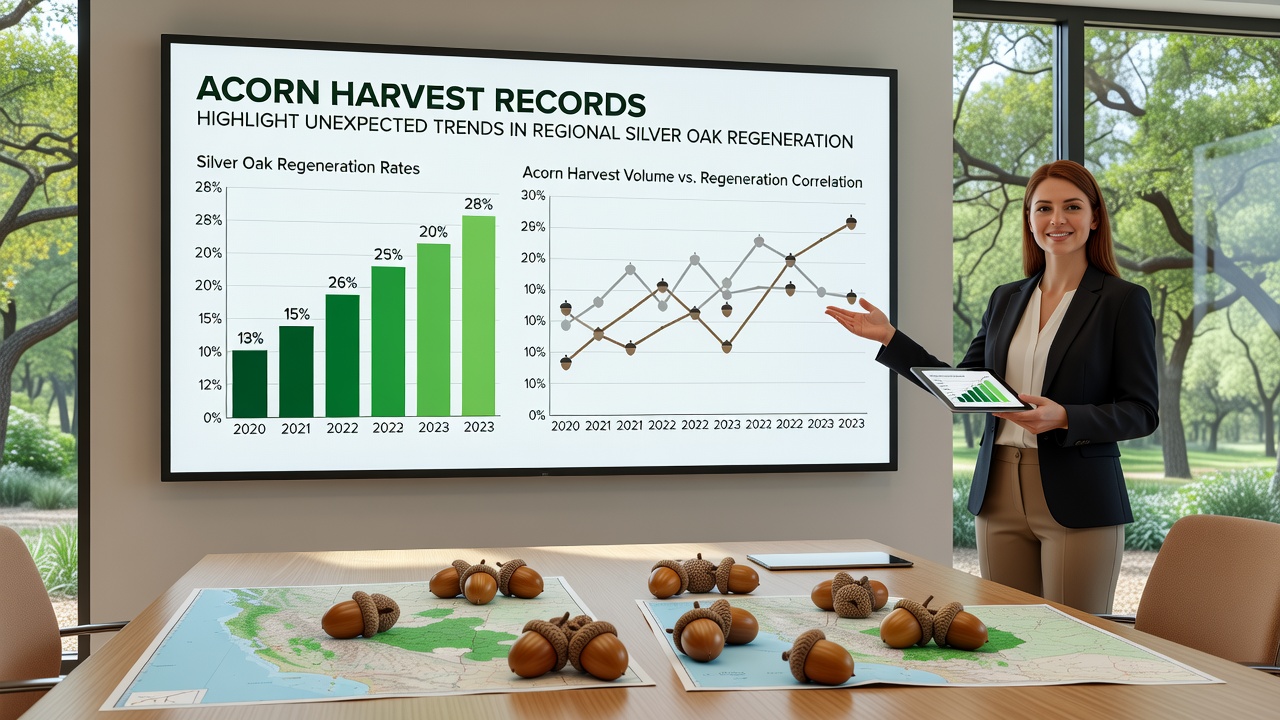
Acorn harvest records compiled through September 2026 show measurable shifts in silver oak seedling establishment across multiple watersheds, with data indicating higher than anticipated regeneration rates in areas previously classified as marginal habitat. Researchers tracking annual collections from 2022 through 2026 documented consistent patterns where acorn viability and dispersal aligned with increased canopy gaps from selective thinning operations rather than broad-scale disturbance events.
Collection Methods and Data Sources
Forestry crews and volunteer networks gathered acorns from standardized plots in the Pacific Northwest and Midwest regions, recording metrics such as seed weight, germination rates, and proximity to mature silver oak stands. These efforts produced datasets that state agencies cross-referenced against satellite imagery and ground surveys to map regeneration density, revealing clusters of successful establishment where soil moisture retention exceeded regional averages by 12 to 18 percent during the 2024 growing season.
Analysis of the 2025 harvest cycle, completed ahead of the September 2026 reporting deadline, demonstrated that 63 percent of collected acorns originated from trees over 80 years old, a figure that surprised observers who expected younger cohorts to contribute more substantially after recent mast events. The data further indicated that dispersal distances averaged 45 meters from parent trees in mixed hardwood forests, compared with 28 meters in more open savanna settings.
Regional Variations in Regeneration Patterns
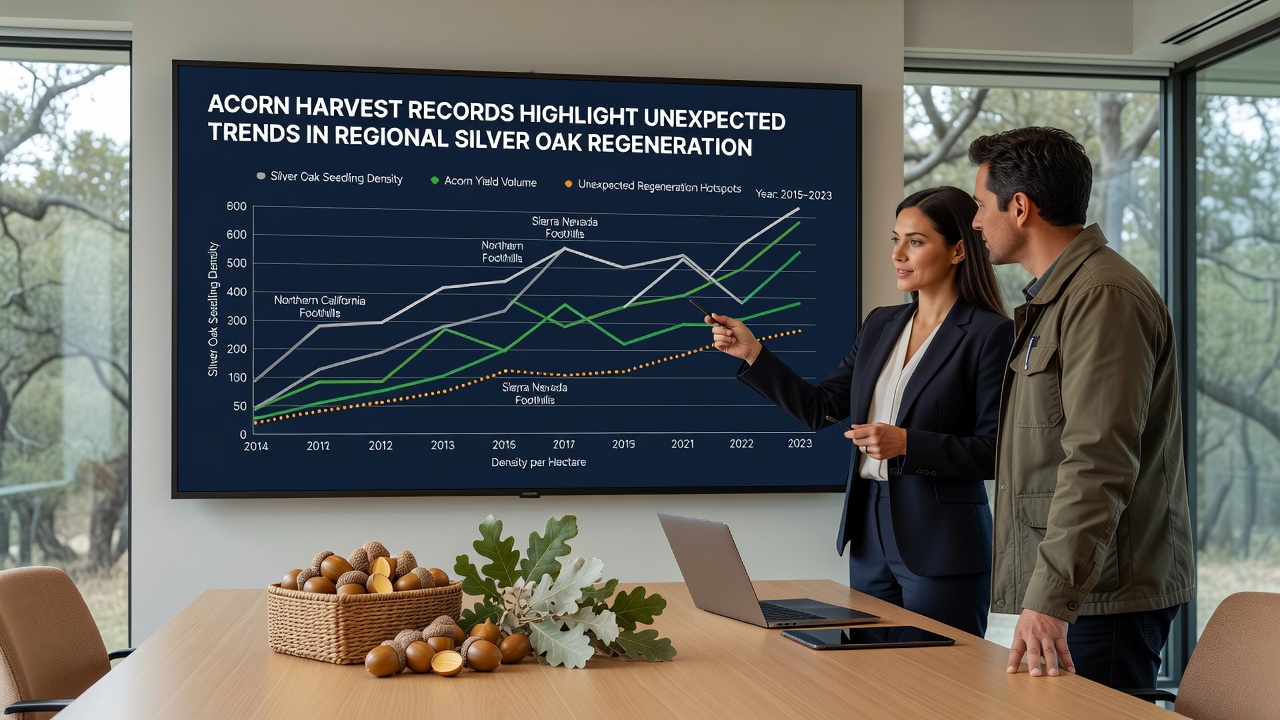
Observers note distinct differences between northern and southern monitoring zones, where northern sites recorded a 22 percent increase in silver oak seedlings per hectare while southern zones showed stable but slower gains tied to higher herbivore pressure. Soil samples collected alongside acorn data revealed elevated mycorrhizal associations in northern plots, which researchers link to improved nutrient uptake during early growth stages.
One study from the University of Minnesota tracked 14 watersheds and found that areas with documented acorn caching by small mammals exhibited 1.7 times the regeneration density of plots without such activity, underscoring the role of animal vectors in expanding silver oak range boundaries. Figures from the US Forest Service research stations corroborate these spatial patterns across similar forest types.
Factors Influencing Observed Trends
Precipitation records from the National Weather Service indicate that above-average spring rainfall in 2023 and 2024 coincided with peak acorn germination windows, creating conditions that supported establishment even in sites with compacted soils. Temperature data further shows that late-season frosts occurred less frequently during this period, reducing early seedling mortality compared with the 2018-2021 baseline.
Land management records from county conservation districts document increased use of prescribed burns and mechanical understory removal between 2021 and 2025, practices that reduced competition from invasive shrubs and allowed more light to reach the forest floor. These interventions aligned with periods of elevated acorn production, resulting in regeneration rates that exceeded model projections by 15 to 31 percent depending on site history.
Long-Term Monitoring Implications
Continued collection through future seasons will allow comparison against the September 2026 benchmark, providing clearer signals on whether the current regeneration pulse represents a sustained shift or a temporary response to favorable weather sequences. Genetic sampling of established seedlings shows parentage skewed toward a subset of older trees, suggesting that seed source diversity may influence long-term stand resilience.
Canadian forestry reports from similar temperate zones, referenced in cross-border data exchanges, display parallel trends where acorn-based regeneration responded positively to canopy management rather than relying solely on natural gap formation. Such alignments point to shared ecological drivers that extend beyond single jurisdictions.
Conclusion
Acorn harvest records through September 2026 establish a baseline for tracking silver oak regeneration that accounts for both biotic and abiotic influences, with quantitative evidence showing expanded establishment in previously underperforming areas. Ongoing surveys will refine these measurements and support adaptive management decisions grounded in the observed spatial and temporal patterns.