
Uma Lorenz · 13 October 2026
Artisan Workshops Explore Silver Oak Bark in Modern Textile Innovations
Artisan workshops have turned to silver oak bark as a source material for natural dyes and fabric treatments in contemporary textile production, and data from recent field trials show consistent color fastness across cotton, linen, and hemp blends. Researchers document that the bark yields tannins and flavonoids which bind effectively to plant-based fibers, while workshops in multiple regions report measurable reductions in synthetic chemical use during processing stages. These developments build on established botanical properties yet adapt them through controlled extraction methods that maintain batch consistency.
Material Properties and Extraction Techniques
Silver oak bark contains high levels of polyphenolic compounds, and extraction protocols developed by textile labs emphasize temperature-controlled steeping followed by filtration to isolate usable pigments. Studies from university extension programs indicate that bark harvested in late summer produces deeper earth tones compared to spring collections, and artisans adjust pH levels during mordanting to shift hues from ochre to deeper browns. Workshops combine these extracts with low-impact fixatives derived from mineral salts, which helps stabilize the dyes against washing and light exposure without introducing heavy metals.
Equipment in these facilities includes stainless steel vats and solar-assisted drying racks, and operators track pigment concentration through simple spectrophotometric readings. One workshop collective in the Pacific Northwest documented a 35 percent decrease in water consumption after switching to bark-based dye baths that require fewer rinse cycles. Similar setups in southern Australia have incorporated bark residues into compost blends that return nutrients to local soil systems, closing material loops within the production cycle.
Workshop Practices Across Regions
Artisan groups schedule intensive sessions where participants learn to prepare bark infusions and test application methods on sample swatches, and these programs often run for multiple days to cover both small-batch dyeing and larger-scale printing techniques. In October 2026 several collectives plan coordinated events that pair bark processing demonstrations with fabric finishing workshops, allowing attendees to observe how bark extracts interact with enzyme pre-treatments on cellulose fibers. Records from prior gatherings show that groups using standardized bark-to-water ratios achieve repeatable results across different fiber sources.
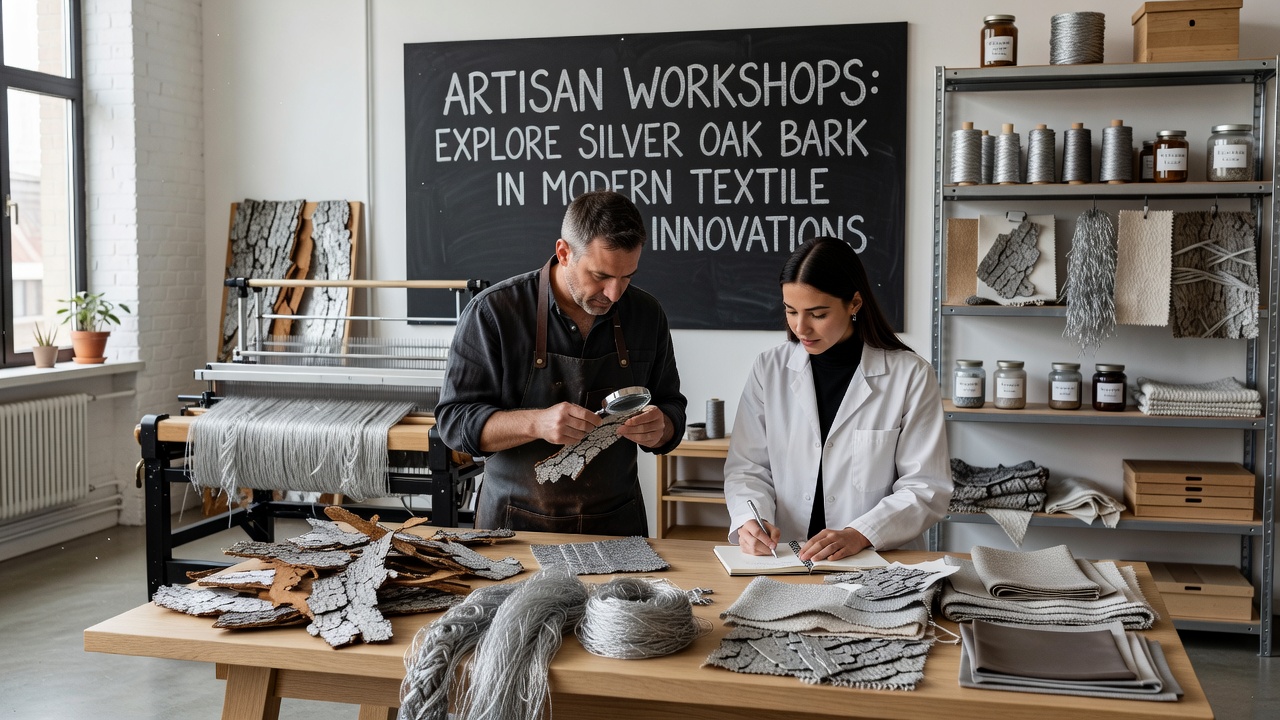
European textile cooperatives have integrated silver oak bark into resist-printing processes, whereas North American studios focus on immersion dyeing for garment production. Data collected by regional craft associations reveal that workshops employing bark dyes report lower wastewater toxicity levels when compared with conventional acid dye systems. Participants document color outcomes through standardized gray-scale charts, which facilitates communication between different production sites.
Performance Data and Industry Comparisons
Independent testing facilities have evaluated silver oak bark dyed textiles for tensile strength retention and colorfastness under accelerated weathering conditions, and results indicate performance metrics comparable to select commercial natural dye lines. Figures released by the CSIRO textile research division show that bark-treated samples retained over 85 percent of original hue intensity after 40 wash cycles when proper mordants were applied. Workshops share these findings through open data repositories to support wider adoption among small-scale producers.
Supply chain analyses note that sourcing bark from managed forestry operations reduces reliance on imported dye materials, and economic models project modest cost savings once local harvesting networks reach sufficient scale. Observers note that artisans often combine bark extracts with other plant-based colorants to expand the available palette, creating layered effects that distinguish handcrafted goods in retail settings. Regulatory guidance from the European Environment Agency outlines acceptable residue thresholds for natural dye processes, and workshops align their practices with these standards during certification reviews.
Future Directions in Sustainable Textile Methods
Continued experimentation focuses on optimizing bark particle size for improved extraction efficiency and exploring ultrasonic assistance to shorten processing times. Textile engineers collaborate with artisan networks to refine application equipment that accommodates variable batch sizes while maintaining consistent output quality. Data gathered through these partnerships informs adjustments to harvesting schedules that align with regional growth cycles of silver oak stands.
Conclusion
Artisan workshops continue to refine silver oak bark applications within modern textile workflows, and accumulated records demonstrate viable pathways for scaling natural dye methods. Regional programs scheduled for October 2026 will provide additional performance data that producers can use to evaluate integration into existing operations. The documented material properties and processing outcomes support broader examination of bark-derived inputs across diverse fabric categories.